Translate

Visualizzazione dei post in ordine di pertinenza per la query stability. Ordina per data Mostra tutti i post

sabato 9 agosto 2025

# gst: stability of twisted states; the role of phase lag, pairwise and higher-order interactions.

<< ️Stability analysis remains a key focus in the nonlinear field. The stability of oscillator networks considering phase-lag coupling is still an unsolved puzzle. Here, (AA)  investigate the linear stability using the maximal Lyapunov exponent and evaluate the basin stability by numerical simulations. >>

<< ️The results show that the phase lag has no significant effect on the proportion of twisted states with linear stability and on their basin sizes, without considering higher-order interactions. In contrast to the stabilizing effect of higher-order interactions on twisted states, pairwise coupling suppresses their linear stability but enhances their basin stability. >>

<< ️When pairwise coupling dominates, phase lag acts to strengthen the linear stability of the twisted state. Furthermore, the phase lag reduces the degree of ordering of the system and shrinks the basin of the twisted state. >>

<< ️These results highlight the synergistic effect of phase lag with pairwise and higher-order interactions on twisted-state basins. >>

Xueqin Wang, Dong Yu, et al. Stability of twisted states: The role of phase lag, pairwise and higher-order interactions. Phys. Rev. E 112, 024202. Aug 1, 2025.

Also: network, pause, chimera, in https://www.inkgmr.net/kwrds.html 

Keywords: gst, network, chimera, phase lags, pause, coupled oscillators, synchronization.

lunedì 25 agosto 2025

# gst: apropos of instabilities, stability of co-annular active and passive confined fluids.


<< ️The translation and shape deformations of a passive viscous Newtonian droplet immersed in an active nematic liquid crystal under circular confinement are analyzed using a linear stability analysis. (AA) focus on the case of a sharply aligned active nematic in the limit of strong elastic relaxation in two dimensions. >>

<< ️Using an active liquid crystal model, (They) employ the Lorentz reciprocal theorem for Stokes flow to study the growth of interfacial perturbations as a result of both active and elastic stresses. >>

<< ️Instabilities are uncovered in both extensile and contractile systems, for which growth rates are calculated and presented in terms of the dimensionless ratios of active, elastic, and capillary stresses, as well as the viscosity ratio between the two fluids. >>

<< ️(AA) also extend (Their) theory to analyze the inverse scenario, namely, the stability of an active nematic droplet surrounded by a passive viscous layer. (Their) results highlight the subtle interplay of capillary, active, elastic, and viscous stresses in governing droplet stability. >>

<< ️The instabilities uncovered here may be relevant to a plethora of biological active systems, from the dynamics of passive droplets in bacterial suspensions to the organization of subcellular compartments inside the cell and the cell nucleus. >>

Tanumoy Dhar, Michael J. Shelley, David Saintillan. Stability of co-annular active and passive confined fluids. Phys. Rev. Fluids 10, 083103. Aug 21, 2025.

arXiv: 2501.04918v2 [cond-mat.soft]. Jul 25, 2025. 

Also: drop, droplet, droploid, elastic, instability, in https://www.inkgmr.net/kwrds.html 

Keywords: gst, drop, droplet, droploid, elasticity, instability, elastic relaxation, interfacial perturbations, capillary, active, elastic, and viscous stresses.

venerdì 10 febbraio 2023

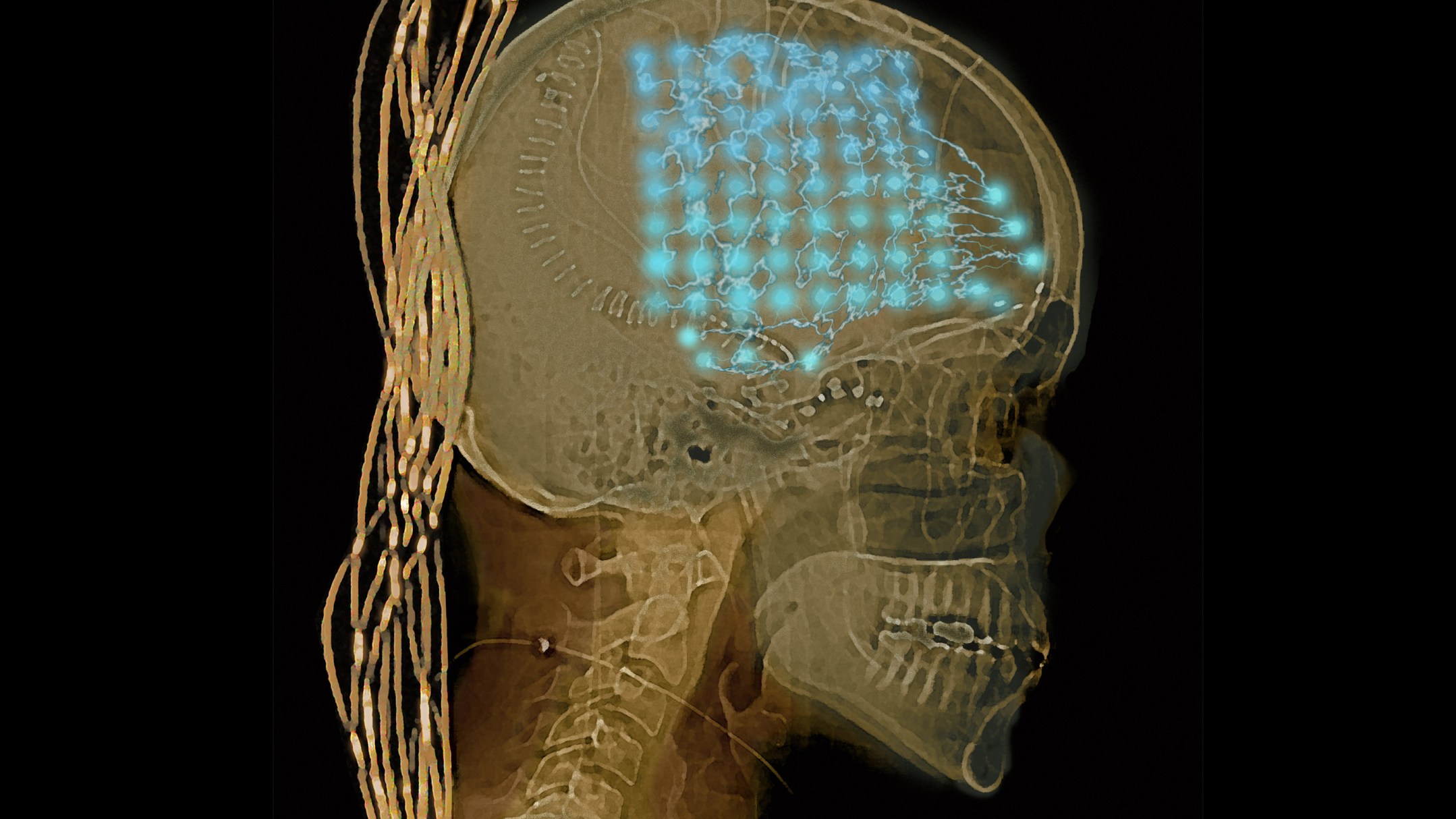
# gst: apropos of transitions, a perpetual dance between states of meta-stability and chaos (in brain).


<< Hello! Today: new research is shining a light on how our brains flit between states of stability and chaos, depending on what we’re doing. >>

<< Our brains exist in a state somewhere between stability and chaos as they help us make sense of the world, according to recordings of brain activity taken from volunteers over the course of a week. >>

<< As we go from reading a book to chatting with a friend, for example, our brains shift from one semi-stable state to another—but only after chaotically zipping through multiple other states in a pattern that looks completely random. >>

<< Understanding how our brains restore some degree of stability after chaos could help us work out how to treat disorders at either end of this spectrum. Too much chaos is probably what happens when a person has a seizure, whereas too much stability might leave a person comatose. >>

Jessica Hamzelou. Neuroscientists listened in on people’s brains for a week. They found order and chaos. Rhiannon Williams. MIT Download. Feb 8, 2023.


<< The team (Avniel Ghuman, Maxwell Wang, et al.) found some surprising patterns in brain activity over the course of the week. Specific brain networks seemed to communicate with each other in what looked like a “dance,” with one region appearing to “listen” while the other “spoke,” say the researchers, who presented their findings at the Society for Neuroscience annual meeting in San Diego last year. >>

Jessica Hamzelou. MIT Tech Rev. Feb 7, 2023. 

Also 

keyword 'danza' in Notes
(quasi-stochastic poetry)

keyword 'dance' in FonT

keyword 'cervello' | 'brain' in Notes
(quasi-stochastic poetry)


keyword 'brain' in FonT

keyword 'chaos' | 'chaotic' in Font


keyword 'caos' | 'caotico' in Notes (quasi-stochastic poetry)


<< Amico, qualunque  cosa suonerai . . . >>  Jelly Roll Morton. cit.: 2113 - soniche a ramulo. Jan 28, 2007


Keywords: gst, brain, transition, chaos, dance


lunedì 26 gennaio 2026

# gst: quantum avalanche stability of many-body localization with power-law interactions.


<< ️(AA) investigate the stability of the many-body localized (MBL) phase against quantum avalanche instabilities in a one-dimensional Heisenberg spin chain with long-range power-law interactions (V ∝ r−α). >>

<< ️(They) finite-size scaling analysis of entanglement entropy identifies a critical interaction exponent αc ≈ 2, which separates a fragile regime, characterized by an exponentially diverging critical disorder, from a robust short-range regime. >>

<< ️(AA) results confirm that the MBL phase remains asymptotically stable in the thermodynamic limit when disorder exceeds an interaction-dependent threshold. >>

Longhui Shen, Bin Guo, Zhaoyu Sun. Quantum Avalanche Stability of Many-Body Localization with Power-Law Interactions. arXiv: 2601.13485v1 [cond-mat.dis-nn]. Jan 20, 2026.


Keywords: gst, disorder, avalanche, avalanche stability, entanglement entropy, criticality. 

martedì 26 maggio 2020

# gst: predict stability in a collapsing ring

<< it is possible to predict the stability of a collapsing ring by counting its kinks. (..) (AA) group describes experiments they conducted that involved placing an elastic ring over a soap film and recording what happens when the ring collapses. >>

Bob Yirka. Counting kinks in a collapsing ring to predict stability. May 20, 2020.


Finn Box, Ousmane Kodio, et al. Dynamic Buckling of an Elastic Ring in a Soap Film. Phys. Rev. Lett. 124, 198003. 13 May 13, 2020.


sabato 20 settembre 2025

# gst: role of evaporation in stability of foam films and foams.


<< ️Understanding the stability of foam films and foams remains a challenge, despite the considerable efforts provided by the scientific community to refine their physical descriptions. This persistent difficulty underscores the interplay of various complex factors. Recently, the role of evaporation has attracted attention for its dual impact: it can either enhance stability or accelerate bursting. >>

<< ️To depict a comprehensive overview on soapy objects, (AA) propose first a short description on the evaporation of drops to present some key results on the evaporation-induced cooling and the consequences on the internal flows generated by Marangoni effects. Then, (They) review the literature on foam films and foams, examining three distinct systems: pure liquids, nonvolatile, and volatile surface active molecules. ️(AA) show that evaporation of foam films and foams can lead to significant variations of temperature. In conclusion, (They) identify a series of open questions and suggest potential research pathways to address these challenges. >>

François Boulogne, Emmanuelle Rio. Role of evaporation in stability of foam films and foams. Phys. Rev. E 112, 031001. Sep 9, 2025.

arXiv: 2509.08958v1 [cond-mat.soft]. Sep 10, 2025. 

Also: bubble, drop, droplet, droploid, in https://www.inkgmr.net/kwrds.html 

Keywords: gst, bubbles, drops, evaporation. 

sabato 9 dicembre 2017

# gst: predicting the exact force needed to crumple a dented can

<< Dent an aluminum can and it will be easier to crush from top to bottom. But predicting the exact force needed to crumple a dented can is notoriously difficult, requiring knowledge of the exact dimensions and position of the flaw >>

Katherine Wright. Synopsis: Crumpling Coke Cans. Nov 28, 2017

https://physics.aps.org/synopsis-for/10.1103/PhysRevLett.119.224101

AA << measure the response of cylindrical shells to poking and identify a stability landscape, which fully characterizes the stability of perfect shells and imperfect ones in the case where a single defect dominates >>

Emmanuel Virot, Tobias Kreilos, et al.  Stability Landscape of Shell Buckling. Phys. Rev. Lett. 119, 224101. doi: 10.1103/PhysRevLett.119.224101.  Nov 28,  2017

https://journals.aps.org/prl/abstract/10.1103/PhysRevLett.119.224101  

giovedì 19 febbraio 2026

# gst: elastoplastic modelling of cyclic shear deformation of amorphous solids.

IMG - Per site elastic energy evolution for poorly vs well annealed samples.

<< ️(AA) develop an energy-landscape based elasto-plastic model to understand the behaviour of amorphous solids under uniform and cyclic shear. Amorphous solids are modeled as being composed of mesoscopic sub-volumes, each of which may occupy states - termed mesostates -- drawn from a specified distribution. The energies of the mesostates under stress free conditions determine their stability range with respect to applied strain, and their plastic strain, at which they are stress free, forms an important additional property. Under applied global strain, mesostates that reach their stability limits transition to other permissible mesostates. Barring such transitions, which encompass plastic deformations that the solid may undergo, mesostates are treated as exhibiting linear elastic behavior, and the interactions between mesoscopic blocks are treated using the finite element method.  >>

<< ️The (AA) model reproduces known phenomena under uniform and cyclic shear, such as the brittle-to-ductile crossover with annealing and the Bauschinger effect for uniform shear, qualitative features of the yielding diagram under cyclic shear including the change in yielding behaviour with the degree of annealing, across a `threshold level', and dynamic phenomena such as the divergence of failure times on approach to the yield point and the non-monotonic evolution of the local yield rate.  >>

<< ️In addition to these results, (They) discuss the dependence of the observed behaviour on model choices, and open questions highlighted by (Their) work. >>

Pushkar Khandare, Srikanth Sastry. Elastoplastic Modelling of Cyclic Shear Deformation of Amorphous Solids. arXiv: 2602.06174v2 [cond-mat.soft]. Feb 5,  2026.

Also: transition, in https://www.inkgmr.net/kwrds.html 

Keywords: gst, transitions, amorphous solids, cyclic shear, mesostates, mesoscopic sub-volumes, plastic strain, plastic deformation, linear elastic behavior, stability limits transition, brittle-to-ductile crossover, divergence of failure times.

sabato 7 novembre 2020

# gst: apropos of nano vortices: the stabilization of skyrmions by weak higher-order exchange interactions

<< Tiny magnetic whirls that can occur in materials—so-called skyrmions— hold high promises for novel electronic devices or magnetic memory in which they are used as bits to store information. A fundamental prerequisite for any application is the stability of these magnetic whirls. >>

<< Previously, a standard model of the relevant magnetic interactions contributing to the (energy) barrier has been established. >>

<< one type of magnetic interactions has so far been overlooked. In the 1920s Werner Heisenberg could explain the occurrence of ferromagnetism by the quantum mechanical exchange interaction which results from the spin dependent "hopping" of electrons between two atoms. "If one considers the electron hopping between more atoms, higher-order exchange interactions occur," says Dr. Souvik Paul, (..). However, these interactions are much weaker than the pair-wise exchange proposed by Heisenberg and were thus neglected in the research on skyrmions. >>

<< Based on atomistic simulations and quantum mechanical calculations (..)  (AA) have now explained that these weak interactions (at a higher temperature than room temperature) can still provide a surprisingly large contribution to skyrmion stability. Especially the cyclic hopping over four atomic sites (..) influences the energy of the transition state extraordinarily strongly (..), where only a few atomic bar magnets are tilted against each other. Even stable antiskyrmions were found in the simulations which are advantageous for some future data storage concepts but typically decay too fast. >>

Julia Siek­mann. Scientists find a new mechanism for the stabilization of skyrmions. Kiel University. Sep 21, 2020.


Paul, S., Haldar, S., von Malottki, S. et al. Role of higher- order exchange interactions for skyrmion stability. Nat Commun 11, 4756. doi: 10.1038/ s41467-020-18473-x. Sep 21, 2020.


sabato 29 marzo 2025

# gst: apropos of multiple delays, transitions to intermittent chaos in quorum sensing-inspired dynamics.

<< This study analyses the dynamical consequences of heterogeneous temporal delays within a quorum sensing-inspired (QS-inspired) system, specifically addressing the differential response kinetics of two subpopulations to signalling molecules. >>️

<< The analysis reveals the critical role of multiple, dissimilar delays in modulating system dynamics and inducing bifurcations. Numerical simulations, conducted in conjunction with analytical results, reveal the emergence of periodic self-sustained oscillations and intermittent chaotic behaviour. These observations emphasise the intricate relationship between temporal heterogeneity and the stability landscape of systems exhibiting QS-inspired dynamics. This interplay highlights the capacity for temporal variations to induce complex dynamical transitions within such systems. >>️

AA << findings show that the presence of multiple delays, particularly when characterised by significant disparities in magnitude, can dramatically alter the system’s stability features and promote the emergence of complex nonlinear oscillatory behaviour. >>️

<< Upon explicitly incorporating distinct delays for different state-components, (AA) have shown how temporal factors can dramatically influence system stability and give rise to a spectrum of complex dynamical behaviours, including intermittent chaos. >>

Anahí Flores, Marcos A. González, Víctor F. Breña-Medina. Transitions to Intermittent Chaos in Quorum Sensing Dynamics. arXiv: 2503.14363v2 [nlin.CD]. Mar 19, 2025.

Also: intermittency, pause, silence, transitionchaos, in https://www.inkgmr.net/kwrds.html 

Keywords: gst, intermittency, pause, silence, transitions, chaos 

venerdì 1 luglio 2016

# p-trade: JPMorgan & Deutsche Bank: sweet imagine with assets of $1 ...

<< Two banks, JPMorgan and Deutsche Bank, account for about 20 per cent of total global derivatives exposure. Each has more than $50bn ... Imagine promising to buy a house for $2,000 with assets of $1 >>

Don't always believe a balance sheet. February 16, 2016 5:21 pm

http://www.ft.com/cms/s/0/95895178-d49c-11e5-829b-8564e7528e54.html

<< "Immaginate  di  acquistare  una  casa  per duemila  dollari  con  garanzie  per  un  dollaro",  chiosò  il  'Financial  Times'  in  un  articolo  dello  scorso  febbraio >>

Fondo  Monetario  Internazionale:  Deutsche  Bank  è  maggior fonte  di  rischi  sistemici  al  mondo. L'Huffington  Post.  30/06/2016  16:47  CEST

http://m.huffpost.com/it/entry/10754644

more:

GERMANY. FINANCIAL SECTOR ASSESSMENT PROGRAM. FINANCIAL SYSTEM STABILITY ASSESSMENT. This report on Financial System Stability Assessment on Germany was prepared by a staff team of the International Monetary Fund. It is based on the information available at the time it was completed in June 2016. 

http://www.imf.org/external/pubs/ft/scr/2016/cr16189.pdf

martedì 18 marzo 2025

# qubit: stability of classical shadows under gate-dependent noise

<< Expectation values of observables are routinely estimated using so-called classical shadows—the outcomes of randomized bases measurements on a repeatedly prepared quantum state. In order to trust the accuracy of shadow estimation in practice, it is crucial to understand the behavior of the estimators under realistic noise. >>

<< In this Letter, (AA) prove that any shadow estimation protocol involving Clifford unitaries is stable under gate-dependent noise for observables with bounded stabilizer norm—originally introduced in the context of simulating Clifford circuits. In contrast, (They) demonstrate with concrete examples that estimation of “magic” observables can lead to highly misleading results in the presence of miscalibration errors and a worst case bias scaling exponentially in the system size. >>

AA << further find that so-called robust shadows, aiming at mitigating noise, can introduce a large bias in the presence of gate-dependent noise compared to unmitigated classical shadows. Nevertheless, (AA) guarantee the functioning of robust shadows for a more general noise setting than in previous works. On a technical level, (They) identify average noise channels that affect shadow estimators and allow for a more fine-grained control of noise-induced biases. >>️

Raphael Brieger, Markus Heinrich, et al. Stability of Classical Shadows under Gate-Dependent Noise. Phys. Rev. Lett. 134, 090801. Mar 4, 2025. 

Also: qubit, in FonT  https://flashontrack.blogspot.com/search?q=qubit  noise, ai (artificial intell) (bot), in https://www.inkgmr.net/kwrds.html   

Keywords: qubit, noise, realistic noise, shadows, robust shadows


giovedì 13 giugno 2024

# gst: helical instabilities from mixed mode transitions in boundary layers

<< Recent (..) direct numerical simulations (DNS) of adverse- and zero-pressure-gradient boundary layers beneath moderate levels of free stream turbulence (𝑇⁢𝑢≤2%) revealed a mixed mode transition regime, intermediate between orderly and bypass routes. >>️

<< In this regime, the amplitudes of the Klebanoff streaks and instability waves are similar, and both can contribute significantly as these interact. Three-dimensional visualizations of transitional eddies revealed a helical pattern, quite distinct from the sinuous and varicose forms seen in pure bypass transition. This raises the fundamental question of whether the helical pattern could be attributed to a previously unknown instability mode. >>️

In AA work << based on stability analyses, (they) show that it is indeed the case. Two-dimensional stability analyses are performed herein for base flows extracted from DNS flow fields. >>️

Rikhi Bose, Paul A. Durbin. Mixed mode transition in boundary layers: Helical instability. Phys. Rev. Fluids 9, 063905. Jun 12, 2024. 

Also: instability, transition, turbulence, waves, in https://www.inkgmr.net/kwrds.html 

Keywords: gst, instability, transition, turbulence, waves


sabato 7 settembre 2024

# gst: phase transition of inertial self-propelled agents, a ‘inverse modeling’ approach.

AA << formulate and analyze a kinetic MFG (Mean-field Game) model for an interacting system of non-cooperative motile agents with inertial dynamics and finite-range interactions, where each agent is minimizing a biologically inspired cost function. >>️️

The << ‘inverse modelling’ approach is to stipulate that the collective behavior of a population of decision-making agents is a solution to a collective optimization or optimal control problem. (..) In a MFG system, the collective behavior is the result of each agent solving an optimal control problem that depends on its own state and control as well as the collective state. MFGs formulated in continuous state space and time are described by coupled set of forward-backward in time nonlinear partial differential equations (PDEs). >>

<< While standard kinetic or hydrodynamic equations used for modelling collective behavior are initial value problems (IVP or evolution PDEs), the MFG systems have a forward-backward in time structure, and hence consist of boundary value problem (BVP in time PDEs). >>

<< By analyzing the associated coupled forward-backward in time system of nonlinear Fokker-Planck and Hamilton-Jacobi-Bellman equations, (AA) obtain conditions for closed-loop linear stability of the spatially homogeneous MFG equilibrium that corresponds to an ordered state with non-zero mean speed. Using a combination of analysis and numerical simulations, (AA) show that when energetic cost of control is reduced below a critical value, this equilibrium loses stability, and the system transitions to a traveling wave solution. >>️
Piyush Grover, Mandy Huo. Phase transition in a kinetic mean-field game model of inertial self-propelled agents. arXiv: 2407.18400v1 [math.OC]. Jul 25, 2024. 

Also: transition, wave, game, in https://www.inkgmr.net/kwrds.html 

Keywords: gst, transition, criticality, bifurcations, wave, games


mercoledì 4 marzo 2026

# gst: superflows around corners.


<< ️(AA) investigate analytically and numerically the dynamics of a two-dimensional superflow governed by the Gross-Pitaevskii equation passing over finite-size rectangular obstacles: an impenetrable wall and an impenetrable rectangular well. Extending classical studies of vortex nucleation around smooth obstacles, (They) focus on the role of sharp corners in determining the onset of vortex nucleation. Using a combination of analytical techniques based on the Schwarz-Christoffel methods for potential flow and on numerical simulations, (They) show that local velocity amplification near sharp corners crucially controls the critical flow velocity for vortex nucleation. >>

<< ️For both wall and well configurations, (They) identify analytically and theoretically the critical velocities as a function of the obstacle width and its height or depth, finding an excellent agreement between the theory and (Their) numerical simulations. (Their) results provide a simple framework for understanding superflow stability past finite-size obstacles with sharp features and are directly relevant to experimentally realizable configurations in atomic Bose-Einstein condensates and related superfluid systems. >>

Thomas Frisch, Christophe Josserand, Sergio Rica. Superflows around corners. arXiv: 2602.18876v1 [cond-mat.quant-gas]. Feb 21, 2026.


Keywords: gst, vorticity, vortex nucleation, two-dimensional superflow, superflow stability, smooth obstacles, sharp corners. 

martedì 15 febbraio 2022

# gst: transitional dynamics among gyrotactic (prolate spheroid) swimmers in turbulence


<< In this study, (AA) consider small, elongated, gyrotactic, swimming particles in homogenous isotropic turbulence (..). Many motile phytoplankton species are gyrotactic, i.e., their swimming direction results from the competition between shear-induced viscous torque and the stabilizing torque due to bottom-heaviness. (..)  Moreover, both single phytoplankton cells and multicellular phytoplankton chains can have elongated shapes, which makes the study of gyrotactic active particles with prolate shapes necessary. >>

AA addressed the following problems:
<< (i) How the clustering is affected by the swimming number Φ and the stability number Ψ? In particular, how to characterize the extent of clustering based on the three-dimensional Voronoi analysis?
(ii) How the clustering is related to the flow structures? This question has two perspectives.  From the space perspective, what are the regions that particles accumulate in? From the time perspective, how long do particles exist in an aggregated state? >>

Zehua Liu, Linfeng Jiang, Chao Sun. Accumulation and alignment of elongated gyrotactic swimmers in turbulence. arXiv:2202.04351v1 [physics.flu-dyn]. Feb 9, 2022.


Also

The effect of noise on the dynamics of microswimmers in externally-driven fluid flows.  


keywords 'turbulence' in FonT   


keywords 'turbolento' in Notes (quasi-stochastic poetry)


keywords: transition, swimmers,  gyrotactic swimmers, spheroids,  prolate spheroids, stability, turbulence


sabato 28 febbraio 2026

# gst: spatiotemporal noise stabilizes unbounded diversity in strongly-competitive communities.


<< ️Classical ecological models predict that large, diverse communities should be unstable, presenting a central challenge to explaining the stable biodiversity seen in nature. (AA) revisit this long-standing problem by extending the generalized Lotka-Volterra model to include both spatial structure and environmental fluctuations across space and time.  >>

<< ️(They) find that neither space nor environmental noise alone can resolve the tension between diversity and stability, but that their combined effects permit arbitrarily many species to stably coexist despite strongly disordered competitive interactions. (They) analytically characterize the noise-induced transition to coexistence, showing that spatiotemporal noise drives an anomalous scaling of abundance fluctuations, known empirically as Taylor's law. >>

<< ️At the community level, this manifests as an effective sublinear self-inhibition that renders the community stable and asymptotically neutral in the high-diversity limit. Spatiotemporal noise thus provides a novel resolution to the diversity-stability paradox and a generic mechanism by which complex communities can persist. >>

Amer Al-Hiyasat, Daniel W. Swartz, Jeff Gore, et al. Spatiotemporal noise stabilizes unbounded diversity in strongly-competitive communities. arXiv: 2602.13423v1 [q-bio.PE]. Feb 13, 2026.

Also: noise, disorder, transition, in https://www.inkgmr.net/kwrds.html 

Keywords: gst, noise, spatiotemporal noise, disorder, transition, noise-induced transition, disordered competitive interactions, spatial structure and environmental fluctuations.

sabato 31 luglio 2021

# phys: Sir Isaac in the corner? The image of a "Time crystal", as a perpetual chaotic "out-of-equilibrium" phase; order and stability in an excited, evolving state.

<< A time crystal is a new phase of matter that, simplified, would be like having a snowflake that constantly cycled back and forth between two different configurations. It’s a seven-pointed lattice one moment and a ten-pointed lattice the next, or whatever. >>

<< What’s amazing about time crystals is that when they cycle back and forth between two different configurations, they don’t lose or use any energy. >>

<< Time crystals can survive energy processes without falling victim to entropy. The reason they’re called time crystals is because they can have their cake and eat it too. >>

<< They can be in a state of having eaten the whole cake, and then cycle right back to a state of still having the cake – and they can, theoretically, do this forever and ever. >>

<< Most importantly, they can do this inside of an isolated system. That means they can consume the cake and then magically make it reappear over and over again forever, without using any fuel or energy. >>️

Tristan Greene. Google's 'time crystals' could be the greatest scientific achievement of our lifetimes. Jul 30, 2021. 


<< The time crystal is the first “out-of-equilibrium” phase: It has order and perfect stability despite being in an excited and evolving state. >>
Natalie Wolchover. Eternal Change for No Energy: A Time Crystal Finally Made Real. Jul 30, 2021. 


Xiao Mi, Matteo Ippoliti, et al. Observation of Time-Crystalline Eigenstate Order on a Quantum Processor. arXiv:2107.13571v1 (quant-ph). Jul 28, 2021.


martedì 26 febbraio 2019

# gst: apropos chaotic cooperation

<< Ecological theory has demonstrated that when direct, pairwise interactions among a group of species are too numerous, or too strong, then the coexistence of these species will be unstable to any slight perturbation. >>

Stacey Butler & James P. O’Dwyer.
Stability criteria for complex microbial communities. Nature Communications Volume 9, Article number: 2970 (2018)

https://www.nature.com/articles/s41467-018-05308-z

https://www.biorxiv.org/content/10.1101/293605v2

<< Pairs of organisms that live off each other sometimes do so well in the mathematical simulations - thriving exponentially in extreme cases, in what Robert May, the theoretical ecology pioneer, once called "an orgy of mutual benefaction" — that everything else can go extinct. >>

AA << explored more precisely how the give-and-take in mutualism affects ecosystem stability and how, under the right conditions, it might contribute to it.  >>

Veronique Greenwood. How Nature Defies Math in Keeping Ecosystems Stable. Sep 26, 2018.

https://www.quantamagazine.org/how-nature-defies-math-in-keeping-ecosystems-stable-20180926/

https://twitter.com/QuantaMagazine/status/1099390696455323651

martedì 30 aprile 2019

# evol: hanging by a rope off a cliff, the vibrant pigments of bird feathers to trace the mechanics of evolution

<< All organisms depend on input of exogenous compounds that cannot be internally produced. Gain and loss of such dependencies structure ecological communities and drive species’ evolution, yet the evolution of mechanisms that accommodate these variable dependencies remain elusive. (AA) show that historical cycles of gains and losses of external dependencies in avian carotenoid-producing networks are linked to their evolutionary diversification. >>

Alexander V. Badyaev, Alexander B. Posner, et al. Cycles of external dependency drive evolution of avian carotenoid networks. Nature Communications volume 10, Article number: 1596 Apr 8, 2019.

https://www.nature.com/articles/s41467-019-09579-y

<< Think about hanging by a rope off a cliff. With one rope, if it disappears, you die. If you have two and one fails, you get to live. But having a third safety rope allows enough stability that you can make something out of the first two - like a ladder - and thus take control of your trajectory while the stability lasts, >> Alexander Badyaev.

What the vibrant pigments of bird feathers can teach us about how evolution works. University of Arizona. Apr 24, 2019.

https://www.eurekalert.org/pub_releases/2019-04/uoa-wtv042419.php